
Glass Packaging Insights
Guides & Insights
History Changed by Accident: The Beautiful Mistakes Born from Glass Bottles
How accidents, failures, and manufacturing byproducts quietly shaped the glass bottles we store, age, and enjoy today.
Humans often assume that progress comes from carefully planned experiments and rigorous design. But in the history of glass bottles, some of the most far-reaching changes came from mistakes, oversights, and failures. They were never supposed to happen, yet they stayed—and ultimately reshaped the way we store, transport, and enjoy liquids.
A Moment of Negligence Taught Wine How to “Breathe”
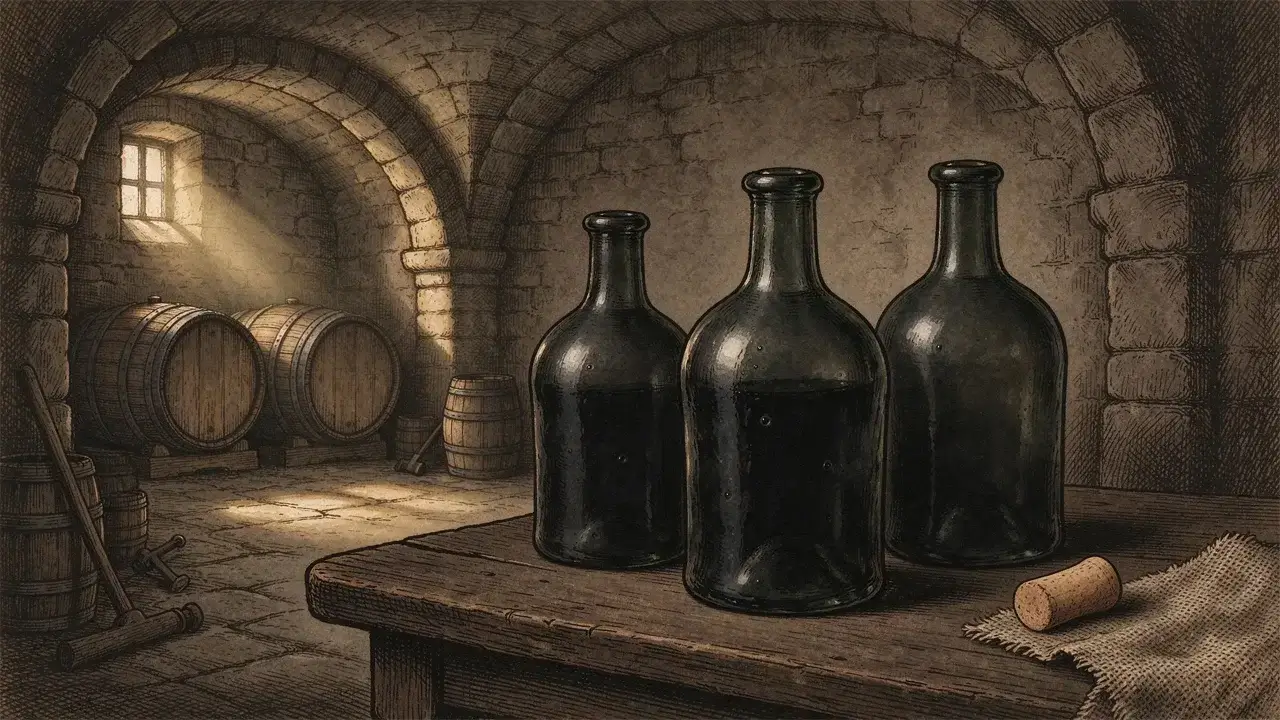
In 17th-century Europe, wine was mostly transported and sold in wooden barrels. Glass bottles were merely a decoration on the tables of a few nobles. Those bottles were thin and fragile, unable to survive long-distance transport, let alone long-term storage.
But the English discovered something by accident: when they fired glass in coal-fueled high-temperature furnaces, the resulting bottles were much thicker and stronger than traditional glass. The original goal was simply to increase output, but what they got was a container that could withstand internal pressure and block light with its dark color. Once wine was poured into these “black bottles,” it didn’t spoil—instead, it slowly developed more complex flavors inside the bottle.
No one set out to invent a thick-walled glass bottle for the purpose of aging wine. It was merely a byproduct of the manufacturing process, yet it accidentally turned wine from something to be “drunk while fresh” into “an art worth waiting for.”
A Failed Experiment Gave the Kitchen and the Lab a Shared Material
In 1913, Jesse Littleton, a physicist at Corning, conducted an experiment to test the heat resistance of a borosilicate glass battery jar. After the experiment, he casually sawed off a piece of the jar’s bottom and took it home.
His wife Bessie had just broken a ceramic baking dish. In a hurry, she put that piece of glass “scrap” into the oven. The result surprised everyone: the cake baked evenly and perfectly, and the glass was completely unharmed.
This “failed experiment” directly led to the birth of Pyrex. But the truly interesting part of the story is that this borosilicate glass later not only entered the kitchen, but also—during World War I, when German laboratory glass supplies were cut off—was pushed by Corning into the laboratory market. In 1918, the U.S. National Bureau of Standards rated Pyrex higher than any other brand of laboratory glass.
An experiment originally meant to test battery jars accidentally changed both home baking and scientific research.
A “Superfluous” Thread Gave Ordinary People the Power to Seal Food
In 1858, Philadelphia tinsmith John Landis Mason filed a patent for a glass jar with a screw thread, paired with a metal lid that could be tightened. His original intention was simple—to make food preservation easier for families.
Before Mason, sealed storage relied on either wax seals or cork stoppers. The process was cumbersome, and the seal depended entirely on luck. Mason’s threaded design allowed ordinary people to easily screw on an airtight, watertight seal. It seemed like just a “small improvement,” but it accidentally turned home food preservation from a skill requiring technique into something anyone could do.
Mason later sold the patent and eventually died in poverty. Yet the jar bearing his name became a familiar presence in countless kitchens—from pickles to jam, from coffee to pencil holders—and it remains so to this day.
A Machine That “Shouldn’t Have Existed” Accidentally Ended Child Labor
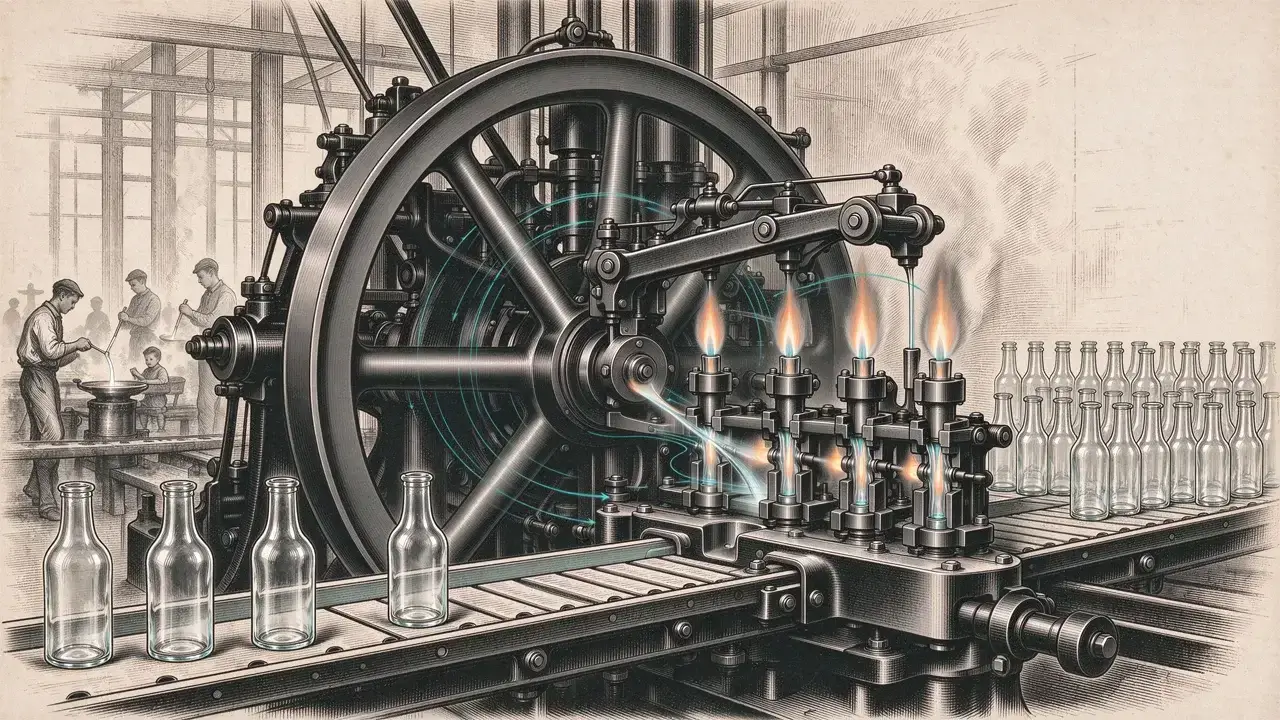
In the late 19th century, glass bottles were still hand-blown, with low output and high prices. Ordinary families rarely bought bottled beverages. The person who changed all this was a man named Michael Owens. He went down into coal mines at age 10, had no formal education, and worked his way up from a child laborer in a glass factory to a factory supervisor.
At the 1893 Chicago World’s Fair, Owens had a wild idea: could a machine blow bottles? After years of experimentation, in 1903 he developed the first fully automatic rotary bottle-making machine. By the 1920s, one machine could produce 320 bottles per minute—more than the hand output of 450 skilled workers.
The machine’s original goal was simply to increase output and reduce costs. But it accidentally produced a profound social impact: the spread of automatic bottle-making machines is considered to have ended child labor in glass factories more effectively than any legislation. Machines replaced the children who should have been in school, and also made glass containers cheap, standardized, and safe.
From Accident to Inevitability: Today’s Glass Liquor Bottles Stand on the Shoulders of All These Accidents
Looking back at these stories, a common thread emerges: none of them were “planned progress.” Thick-walled glass bottles were made to increase output, not to age wine. Pyrex came from a failed battery jar test, not to make kitchens better. Mason jar threads were originally just for convenience, not to let ordinary people seal food. Owens’s machine was originally just for efficiency, yet it accidentally changed the fate of child laborers.
But today, the glass bottle industry no longer relies on “accidents.”
In materials, modern glass liquor bottles commonly use lead-free glass. Some high-end products even use high-white or crystal-white glass, which offers higher light transmission and better showcases the color of the liquor. Lightweighting technology is also advancing—a bottle of the same capacity can weigh more than 20% less than it did a decade ago, reducing both transportation costs and carbon emissions.
In craftsmanship, mold design and forming technology have become highly precise. Embossed textures, diamond facets, and brand logos that once required hand carving can now be reproduced in batches through high-precision molds, while retaining a three-dimensional feel in both touch and appearance. Surface treatment has also expanded from simple transparent glass to frosting, spraying, electroplating, silk-screen printing, hot stamping, and many other processes, meeting the tonal needs of different brands.
In closures, from traditional cork stoppers to screw caps, crown caps, swing tops, and polymer sealing components, the ways to seal a glass bottle have become increasingly diverse. In particular, the use of screw caps in premium spirits and wine is changing the old stereotype that “only cork is high-end.”
In customization, the needs of B2B clients are becoming increasingly segmented. Brandy bottles, whiskey bottles, tequila bottles, gin bottles, and rum bottles each have different requirements for bottle shape, capacity, bottle mouth specifications, and pressure resistance. A bottle can have sharp facets on the front, a smooth transition on the back, and embossed textures on the sides—all achievable with today’s mold technology, while maintaining consistency in mass production.
More importantly, the recyclability of glass itself has given it a renewed competitive advantage in an era of growing environmental awareness. Glass can be recycled indefinitely without losing quality. For liquor brands, choosing a glass bottle is not just choosing a container—it is choosing a sustainable packaging language.
From that accidentally thickened black bottle in the 17th century to every carefully designed custom bottle on an independent website today, the path glass containers have traveled is essentially a history of “accidents retained, experience accumulated, and technology iterated.”
And today, when you pick up a glass liquor bottle, you are not just holding a container. You are holding the most reasonable answer left after centuries of countless mistakes, oversights, and failures. And that answer is still being rewritten.
LET'S GET STARTED
Ready to Start Your Custom Glass Bottle Project?
Contact us today for a free quote and design support. Share your ideas, dimensions, drawings or target market, and our team will respond with tailored recommendations and a clear timeline from sampling to mass production.