
Glass Packaging Insights
Guides & Insights
Glass Bottle Mold Costs Explained: Shared Tooling, Custom Tooling, Pricing & Ownership
A practical breakdown of glass bottle tooling expenses—shared tooling, bespoke tooling, semi-custom options, cavity counts, and ownership clauses. What you should know before signing.
If you ask someone placing their first order what catches them off guard, tooling charges are often at the top of the list. Buying ready-made packaging is one thing; producing glass bottles is another—it needs molds, where two metal halves close around molten glass and blow it into shape. Tooling prices swing a lot: sometimes you pay nothing extra, sometimes you pay thousands more. Everything hinges on one question: does the factory already have a mold for your desired bottle shape?
This article breaks down what tooling costs actually consist of, when you can avoid them, and what to watch for in contracts. If you are about to place your first order with a Chinese factory, you may also want to read some mistakes in sourcing glass bottles from China, which covers minimum order quantities, payment terms, and lead times in detail.
What Is a Glass Bottle Mold?
In plain terms, a glass bottle mold is a two-part metal cavity, typically made of cast iron or bronze. In production, the two halves close together, and compressed air blows a gob of molten glass into the cavity. Once it cools, the mold opens and the bottle comes out.
A cast iron mold usually lasts around 500,000 to 800,000 cycles. That may sound like a huge number, but a line running 24 hours a day burns through it fast. As the mold wears, surface quality drops—you begin to see clear seam lines, inconsistent wall thickness, or bottles sticking.
Shared Molds vs. Custom Molds
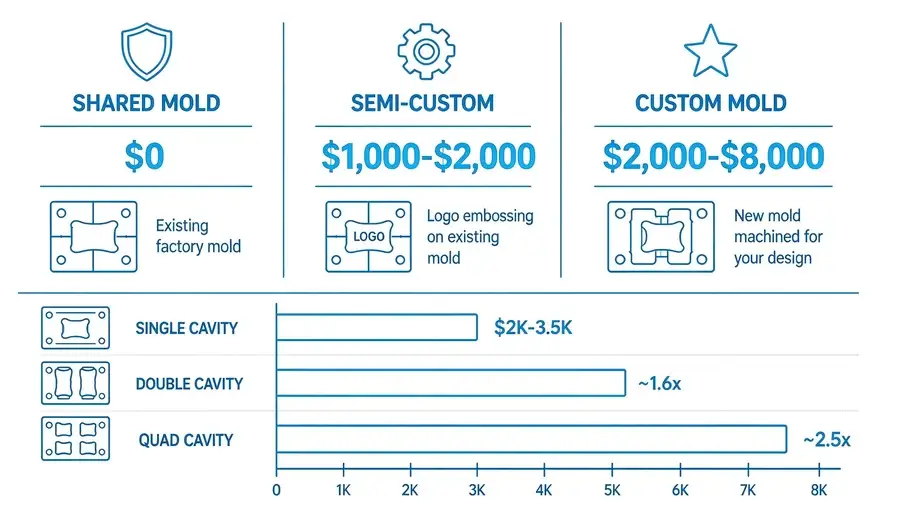
This is exactly where tooling charges diverge. When the factory already owns a mold for your target bottle shape, there is no mold fee. When a new mold must be machined from zero, the cost falls between $2,000 and $8,000.
Shared molds (no tooling charge). Over time, the factory has built up many existing molds from past orders—mostly standard shapes like Boston rounds, Woozy bottles, Bordeaux wine bottles, and general jars. You pay only for glass and production. This also explains why bottles from different brands can look identical: they come from the same mold.
Custom molds ($2,000–$8,000). These are made specifically for your design. Three things drive the price: how complex the bottle shape is (embossing, non-round contours, decorative details), the mold material, and how many cavities it has. A simple custom Boston round with a logo emboss sits at the low end. A premium alien-shaped spirits bottle with deep relief sits at the high end.
Semi-custom ($1,000–$2,000). A middle path: the factory modifies an existing mold—adding your logo, changing the base profile, or adjusting the neck finish. The result is not fully unique, but it gives you visible brand identity for less money.
Number of Cavities: The Trade-off Between Speed and Upfront Cost
A mold may contain just one cavity (single cavity) or several identical cavities side by side (multi-cavity). More cavities mean a higher mold price, but faster output:
- Single-cavity: lowest mold cost, slowest speed—roughly 12–20 bottles per minute.
- Dual-cavity: mold cost rises to about 1.6 times, while output doubles.
- Four-cavity: mold cost is roughly 2.5 times higher, and speed is four times that of a single cavity.
For a one-time order of 50,000 bottles, a single cavity is sufficient. But once annual volume passes 500,000 bottles, the math changes: the higher cost of a multi-cavity mold gets spread over a large output, and the per-bottle savings from faster production can repay the upfront investment.
Ask suppliers to quote single-cavity and multi-cavity options separately, and to break down per-bottle production cost for each—the gap may surprise you.
Mold Ownership: Must Be Included in the Contract
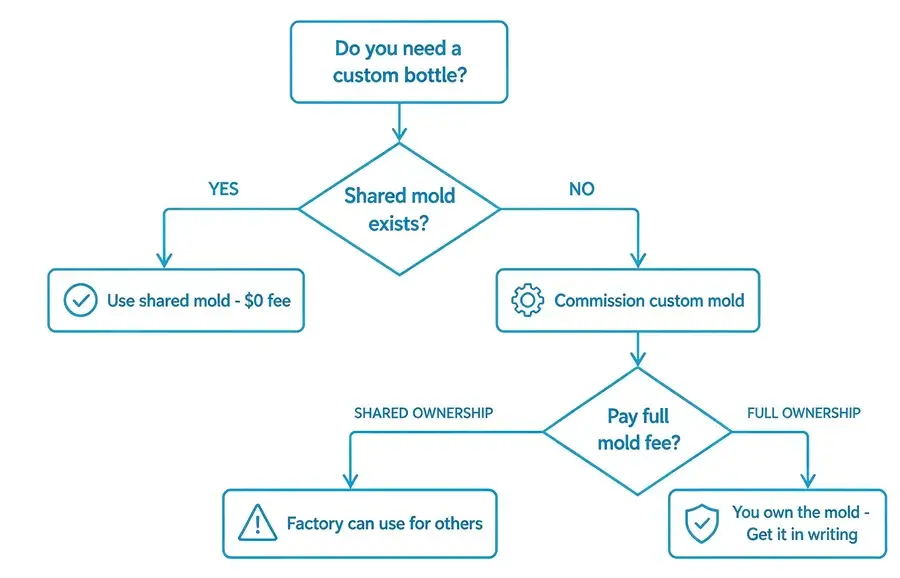
Many buyers overlook this part and later regret it. When you pay for a custom mold, it should belong to you. Yet if the contract is vague, some factories may interpret it differently. Possible outcomes include:
- The factory says the mold becomes theirs once your order is finished.
- Your mold is used to make bottles for other buyers—perhaps your competitors.
- A monthly "storage fee" of $50–$200 is, in effect, holding the mold hostage.
Make sure the purchasing contract includes these clauses:
- The mold is your property, and you may take it back whenever you wish.
- The factory cannot use the mold for other clients without your written approval.
- Storage of the mold is free for 12 months following the last order.
Certain factories may suggest splitting the mold cost, provided that ownership is also shared—meaning they can use the mold to accept orders from other customers. If lowering cost is your priority and you do not mind other brands using the same bottle shape, this can be a workable arrangement.
Reference Mold Costs by Bottle Type
The following reference ranges are based on Chinese glass factories and priced per cavity:
- Standard round bottles (Boston rounds, Bordeaux bottles): $2,000–$3,500
- Woozy / hot sauce bottles: $2,500–$4,000 — shared molds are widespread, so always ask first
- Dropper bottles: $2,000–$4,000
- Mason jars: $3,000–$5,000
- Complex shapes (non-round, deep relief): $3,500–$6,000
- Custom premium bottles (specialized, heavy relief, decorative): $5,000–$12,000+
Remember These Points Before Placing an Order
- Start by asking whether a shared mold exists. Many designs that appear to need full customization are close enough to existing tooling and can be handled semi-custom.
- Mold lead time runs 25–45 days. Build it into your schedule from day one—it is often the longest single wait in the whole order.
- Tooling is a one-time cost. If a factory tries to charge a recurring "mold maintenance fee," challenge it. Normal wear during production is the factory's responsibility; you pay only once.
- When you order several bottle types, each one needs its own mold. Plan your budget accordingly.
If you are comparing supplier quotes and cannot tell whether a mold fee is fair, check the standard price range in the bottle type database. Having data behind you makes negotiations far easier.